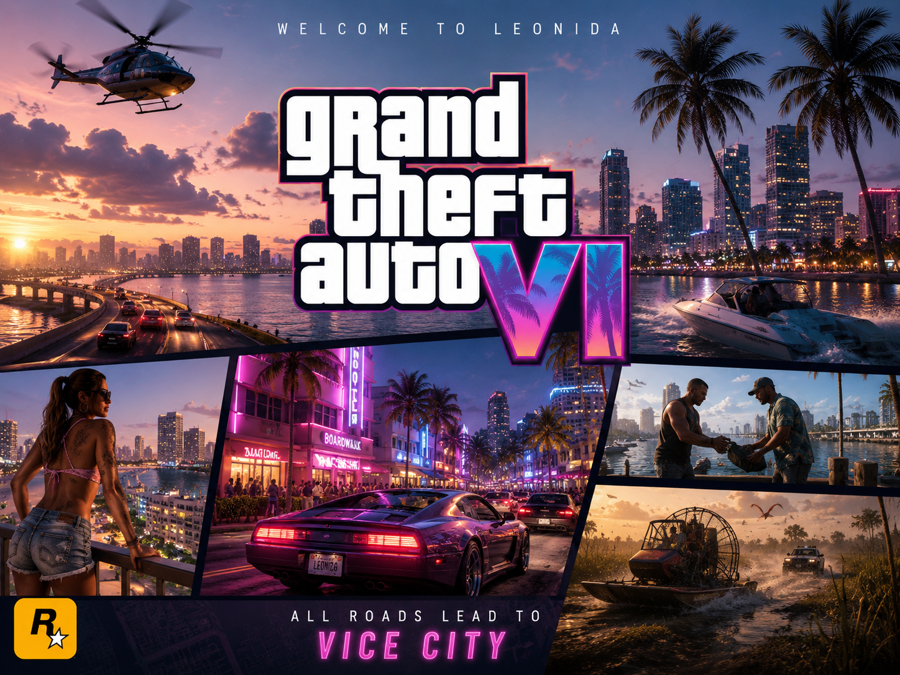
There's a moment every returning GTA Online player knows. You log in after a year away, drive your once-cool sports car out of the garage, and realize it's the automotive equivalent of a flip phone. Somewhere between your last session and this one, the goalposts moved. The new toys cost tens of millions. The old grind routes barely dent the bill. Welcome back — please insert Shark Card.
I don't say that to dunk on Rockstar. GTA Online is, by almost any measure, one of the most successful live-service experiments in gaming history. But as the community starts imagining what a next-generation GTA online mode could look like, I think it's worth being honest about what the current economy actually is, what it costs us as players, and what a smarter version might feel like. This is opinion, not prophecy — I have no inside information about how any future online mode will be structured. What I do have is a decade of receipts.
The Treadmill Is the Product
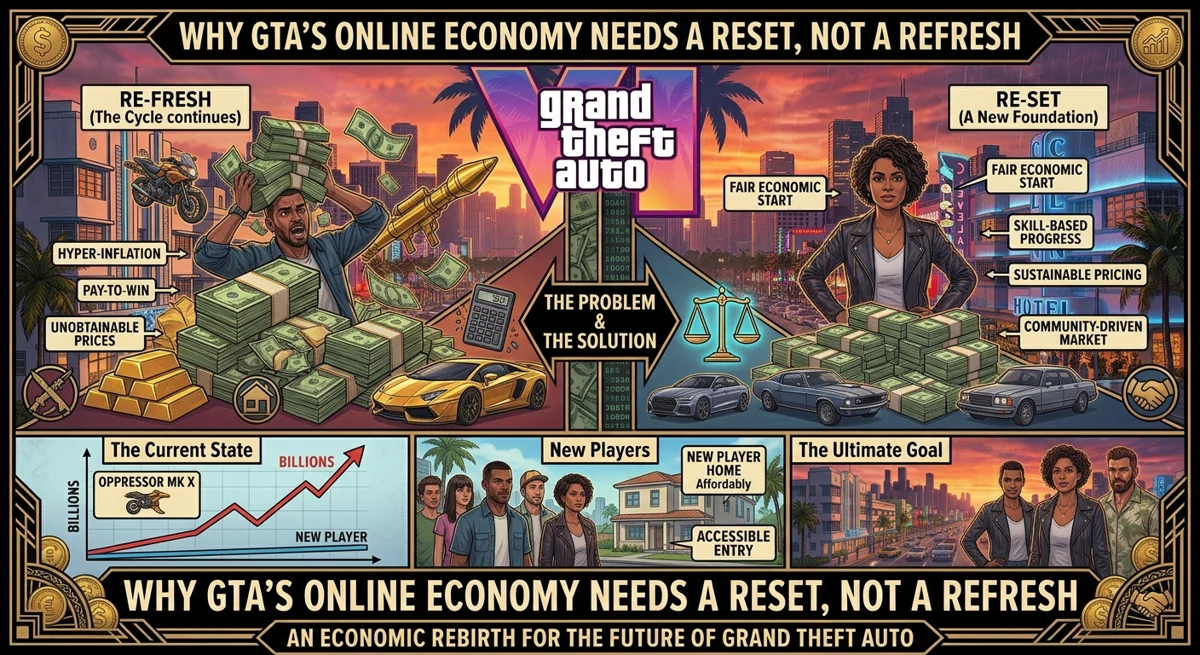
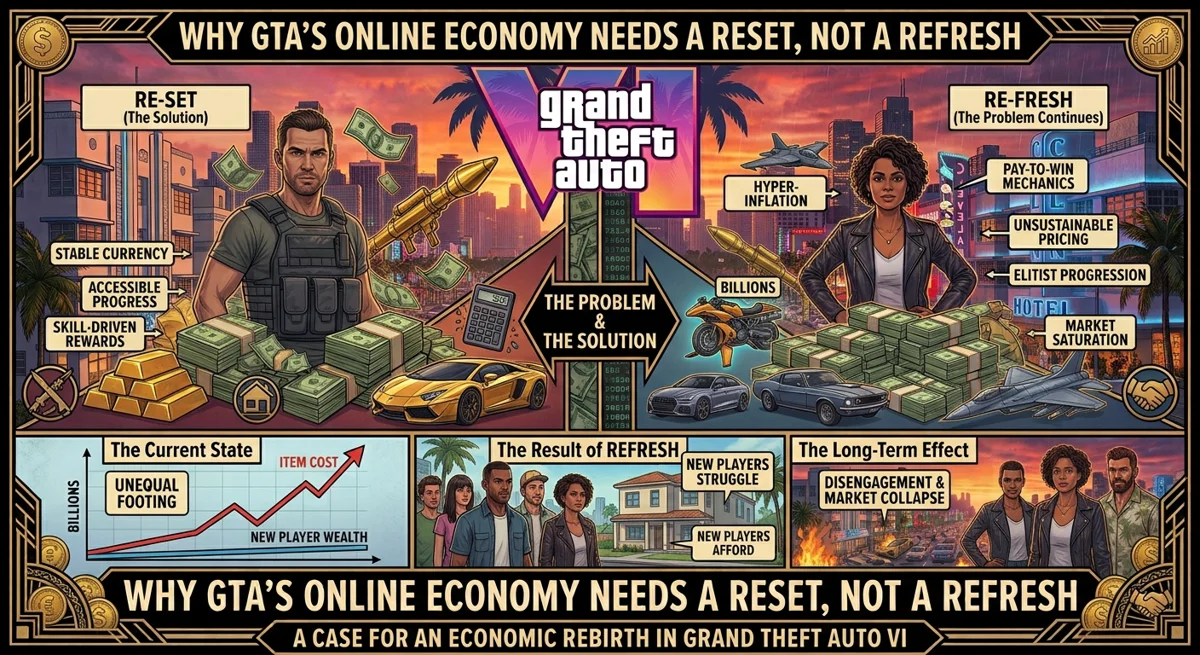
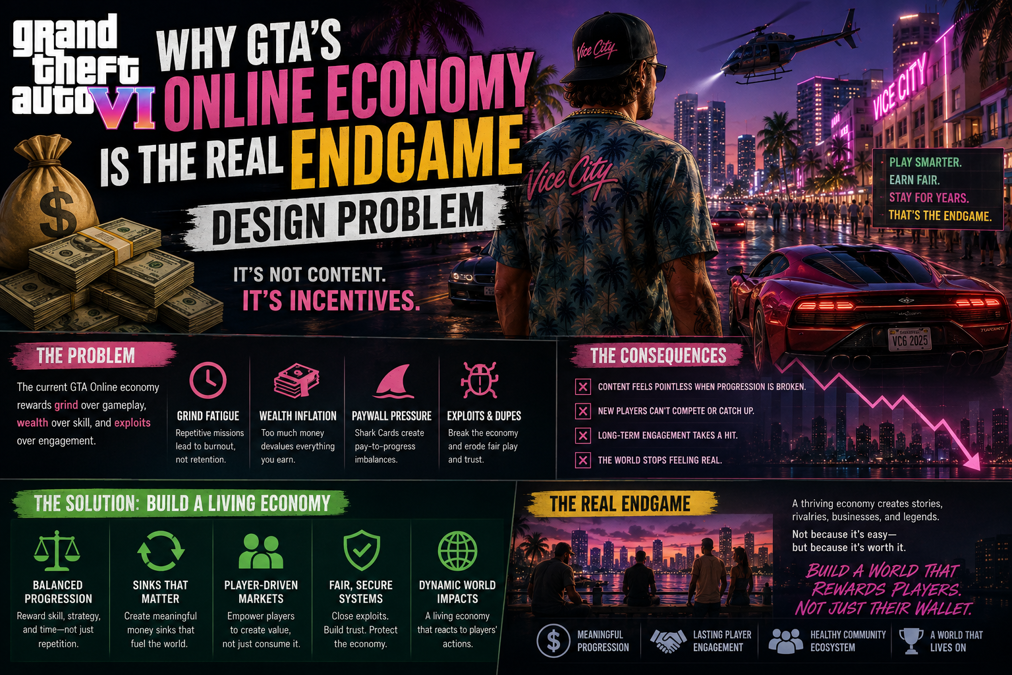
GTA Online's economy isn't broken. It's working exactly as designed. Prices inflate because inflation is the engine. Every new update introduces content priced above the previous ceiling, which nudges the average player toward one of three doors: grind harder, exploit the meta job of the month, or spend real money. The first is time, the second is knowledge, the third is cash. All three feed the same machine.
The genius of it is that the treadmill is dressed up as aspiration. You're not being nickel-and-dimed; you're chasing a lifestyle. Penthouses, arcades, nightclubs, agencies, bunkers — each new business is framed as an upgrade to your criminal empire, but functionally they're subscription boxes with a one-time entry fee. The status symbol is the grind.
I don't hate this on principle. Progression systems need friction. The problem is that friction has, over the years, calcified into something closer to a paywall for anyone who doesn't play every week.
What New Players Actually Feel
Try this thought experiment: imagine you've never touched a GTA online mode before. You boot it up, tutorial finishes, you're standing on a street corner with a cheap car and a pistol. What now?
The answer, in the current game, is a menu labyrinth. Businesses to buy, missions to unlock, MC clubhouses, CEO offices, hangars — a decade of accumulated content compressed into a single onboarding funnel. Veterans navigate it on muscle memory. Newcomers bounce off. I've watched friends install the game, play for four hours, and uninstall because they couldn't figure out how to make money that didn't feel like a second job.
Any future online mode has a chance to fix this, and I'd argue it's the single most important design problem to solve. Not the map. Not the heists. The onboarding. Because a live game lives or dies by whether the person who joins in year three can still have fun without a spreadsheet.
Three Directions I'd Love to See
Since we're in opinion territory, let me actually put some stakes in the ground. If I were on a whiteboard trying to design a healthier online economy for a modern GTA-style game, three ideas would be at the top of the list.
- Meaningful catch-up mechanics. Not double-money weekends, which mostly reward players who were already going to grind. I mean structural catch-up: returning players get a bonus that scales with time away, or new content is priced against a rolling median of player wealth rather than always ratcheting upward.
- Businesses that require presence, not just ownership. The current model rewards owning things and then doing something else while they tick. That's a mobile-game loop wearing a GTA costume. I'd rather see businesses that are genuinely fun to run — with actual moment-to-moment decisions, rival players, dynamic events — even if they generate less passive income.
- A cosmetic layer that's actually cosmetic. Give players a way to flex without those flexes being locked behind the same currency that gates gameplay. Separate the status economy from the progression economy. Fashion should not compete with rent.
None of these are radical. Other live-service games have tried versions of all three. The question is whether a franchise this dominant feels any pressure to evolve, or whether the Shark Card model is simply too profitable to touch.
The Community Is Not a Monolith
Whenever I write something like this, I get two responses in the comments. One camp says the grind is the point — that earning your first supercar over weeks of heists is precisely what makes it feel earned. The other camp says the whole system is predatory and only survives because there's no serious competition in the open-world crime sandbox.
Both are right, and that's what makes this interesting. GTA Online serves radically different audiences with the same systems: the hardcore session-runner who treats it like a job, the roleplayer who mostly ignores the economy, the casual who logs in twice a year, the kid on a shared console using their older sibling's account. A one-size economy was always going to strain under that weight, and after a decade of patches, the seams are showing.
The interesting design challenge for whatever comes next isn't picking a side. It's building an economy flexible enough to feel fair to all of them at once. That's genuinely hard. It's also the kind of problem a studio with Rockstar's resources should be able to solve if they want to.
Why I'm Cautiously Optimistic
Here's where the opinion gets warmer. For all my complaints, I think there's real reason to believe the next chapter of GTA online play will be better calibrated than what we have now. Not because I've seen anything — I haven't — but because the live-service landscape has changed enormously since the original launched. Player tolerance for grind-then-pay loops has dropped. Competitors have shown that generous economies can still be commercial hits. Regulators in some regions are eyeing loot-adjacent monetization more seriously than they used to.
A studio launching a major new online mode today is operating in a very different market than one launching in 2013. They know that. Whether they act on it is another question, and one I'm not going to pretend to answer.
The Grind We Actually Want
What I keep coming back to is that grinding isn't the enemy. Great games are full of grinds we volunteer for. The problem is when the grind stops feeling like a game and starts feeling like a bill. When your in-game bank balance becomes something you manage instead of something you spend.
The best version of a next-generation GTA online economy, in my head, is one where I log in after six months away, drive my old car out of the garage, and it still feels like mine. Maybe not the fastest thing on the road anymore. But not a joke, either. That's a small ask. It's also, weirdly, the hardest one.
Over to you: what's the one change you'd make to how a GTA online economy works — and would you sacrifice content volume to get it? Drop your take in the comments.